About the Japan Specified Skilled Education Support Association
We promote education, human resource development systems, and institutional cooperation that contribute to the proper operation of Japan's international employment programs.
Organization
Japan Specified Skilled Education Support Association
Official English Name
JAPAN SPECIFIED SKILLED EDUCATION SUPPORT ASSOCIATION
Representative
Norio Hattori
Title
Representative Director
Established
July 22, 2025
Company Registration Number
0100-05-040414
Address
1-30-5 Nihonbashi Kakigaracho, Chuo-ku, Tokyo, Japan
Non-profit education support organization. We are not a registered support organization.
Main Activities
Pre-arrival education, Japanese-language education, vocational skills education, safety education, international educational cooperation, support for institutional agreements, and education for receiving companies.
Philosophy
Through education, we contribute to mutual understanding between Japan and other countries, industrial human resource development, and stable local communities. We build a foundation in which both international talent and receiving companies can grow with confidence.
Purpose
We develop the educational opportunities and training systems needed before international talent begins working in Japan and contribute to sound and responsible program operation.
Operating Principles
We emphasize public benefit, transparency, and education while promoting cooperation among overseas governments and educational institutions, Japanese companies, local governments, and related organizations.
Our Position
We do not provide recruitment placement or employment brokerage. As an independent and neutral education and assessment organization, we develop educational standards and objectively assess learning and achievement.
Our Philosophy and Purpose
Developing People's Futures, Not Simply Sending Workers
Developing people's futures, not simply sending workers
The Japan Specified Skilled Education Support Association does not regard international talent merely as a source of labor. Our mission is to create an environment in which each person can properly learn Japanese, professional skills, and Japanese culture and social life, and can grow while working safely and with confidence.
Working in Japan should not end as a temporary employment opportunity. It should become a learning experience that helps international talent build their future. At the same time, encounters with new people, knowledge, and cultures should contribute to the sustainable development of Japanese companies and communities.
We connect both sides through education.
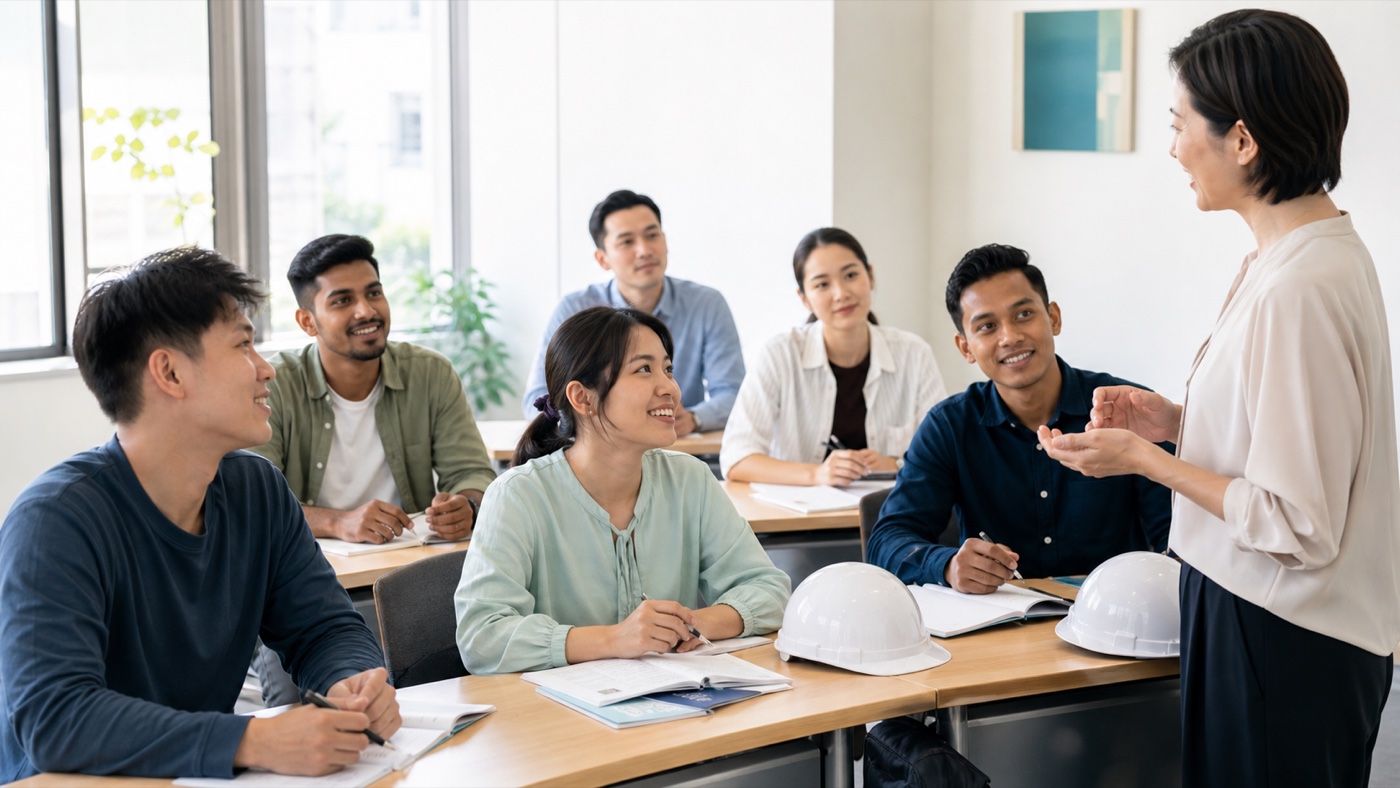
Pre-arrival education creates the foundation for people to work safely, confidently, and with opportunities to grow.
Our Core Principles
1. Make education the starting point
For international talent to work safely and with pride in Japan, education must begin before arrival. Japanese-language education, vocational skills education, occupational safety and health education, and daily-life and cultural education are essential.
We promote education that goes beyond passing an examination. Learners should acquire the knowledge, judgment, and communication skills needed in actual workplaces and local communities.
2. Assure the quality of education and assessment
We develop common curricula, teaching materials, instructional standards, and assessment standards so that the quality of education does not vary significantly by country, region, or institution.
It is not enough to confirm that education was provided. We must properly confirm what each person learned and what they can now do, enabling Japanese receiving companies to welcome people with confidence.
3. Eliminate opaque brokerage and excessive financial burdens
International talent should not be forced to pay excessive brokerage fees or incur heavy debt before coming to Japan, leaving them with no choice but to work under disadvantageous conditions.
In cooperation with overseas government agencies, educational institutions, related organizations, and Japanese receiving stakeholders, we promote transparency in information and costs and seek a fair human resource development and international cooperation system that does not depend on abusive brokers.
4. Support both international talent and receiving companies
Adaptation cannot be demanded only from international talent. Receiving companies must also understand applicable systems, culture, religion, daily-life customs, and appropriate methods of instruction.
We integrate education for international talent with support for receiving companies, creating workplaces based on mutual understanding and employment environments in which people can work safely and remain for the long term.
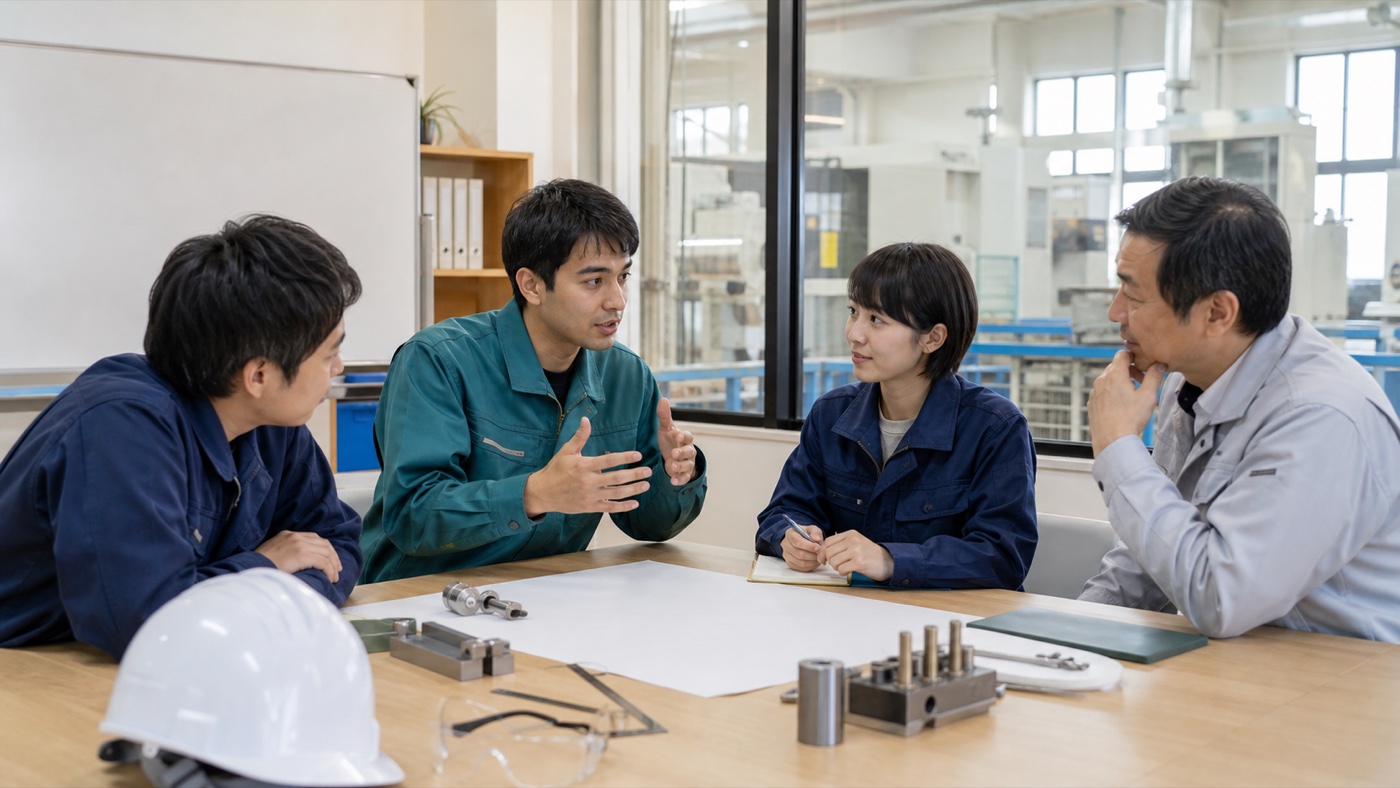
International talent and receiving companies learn together and build a workplace based on mutual understanding.
5. Connect skills acquired in Japan to development in each person's home country
We promote a circular model of international cooperation in which Japanese language, vocational skills, safety management, quality management, and professional ethics acquired in Japan contribute to each person's future and to industrial development in their home country.
Employment in Japan is not the final goal. We develop people with a view to employment, entrepreneurship, instructor development, and industrial advancement after they return home.
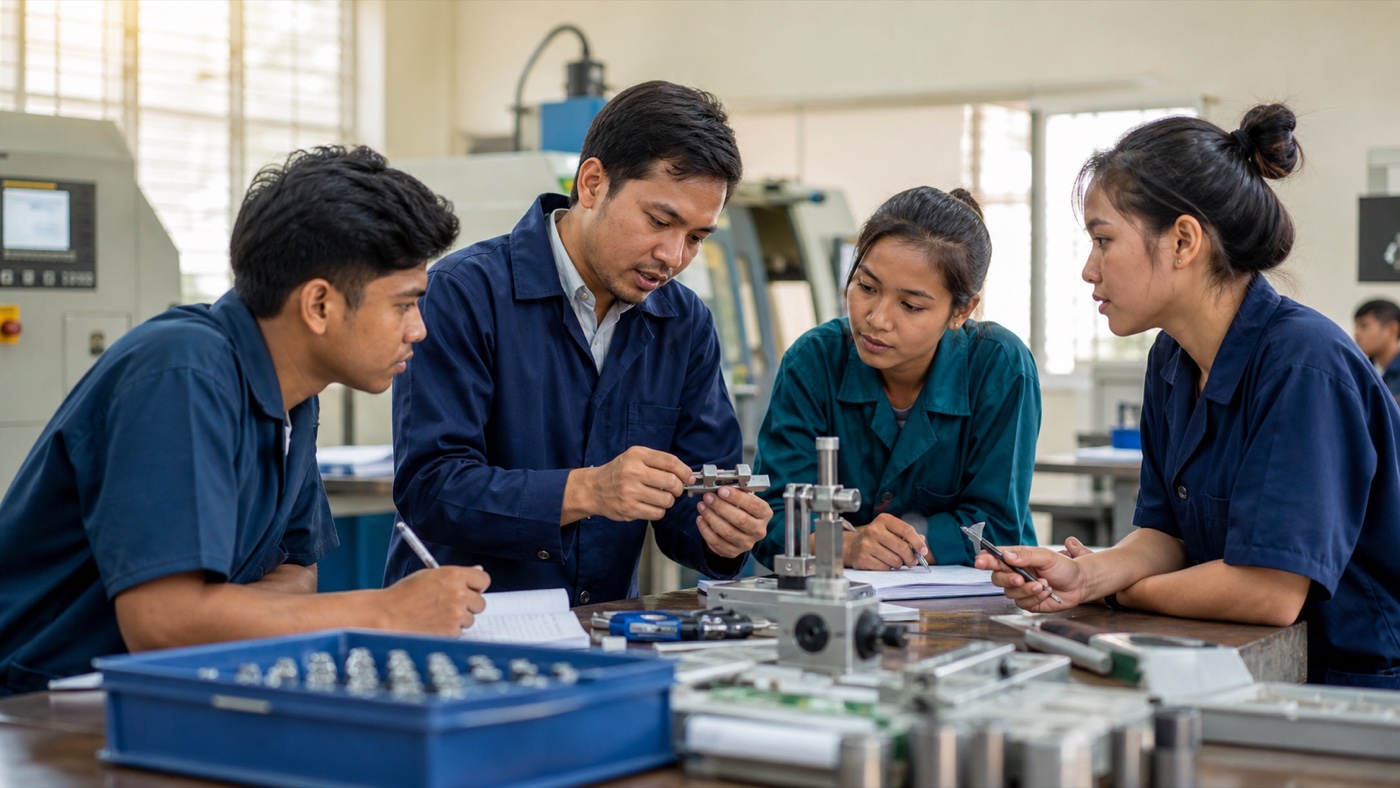
Skills and experience gained in Japan are shared with the next generation and contribute to industrial and social development.
Our Objectives
We put these principles into practice through the following activities:
Japanese-language, professional skills, occupational safety and health, and daily-life and cultural education for international talent
Development of industry- and occupation-specific curricula, teaching materials, instructional guidelines, and assessment standards
Educational cooperation with overseas educational institutions, government agencies, and related organizations
Training for teachers, instructors, and assessors and improvement of instructional quality
Support for receiving companies and related organizations in system understanding, cross-cultural understanding, and receiving-system development
Protection of the rights of international talent and prevention of inappropriate brokerage practices
International cooperation that connects skills acquired in Japan to industrial and social development in each person's home country
Development of communities in which Japanese and international residents respect one another, work together, and grow together
Our Institutional Position
Our primary purpose is not to place people as a sending organization, supervising organization, or registered support organization.
Our role is to support the quality of human resource development and the integrity of relevant systems by serving as a neutral platform for education, assessment, information, and cooperation among institutions in Japan and overseas.
The Future We Seek
A society in which people with the desire to learn and work receive proper education and fair opportunities regardless of nationality or place of origin.
A society in which international talent is respected in Japan and can work safely and continue to grow.
A society in which receiving companies do more than fill labor shortages and instead create new value and possibilities together with their people.
A society in which skills and experience cultivated in Japan are shared around the world and contribute to the education and industrial development of the next generation.
Through the power of education, we will build a sustainable path for human resource development that connects Japan with the world.
Receiving Companies Also Need Thorough Preparatory Education
Pre-arrival education for international talent alone is not enough to ensure safe work and long-term retention in Japan. Receiving companies must also receive thorough education and develop the knowledge and commitment required to welcome people responsibly.
Employing international talent is not merely a solution to labor shortages. It means welcoming and developing new colleagues whose languages, cultures, lifestyles, and perspectives on work may differ.
Just as international talent learns Japanese and job skills, receiving companies must learn about cultural backgrounds, educational environments, residence status systems, appropriate instruction, and support for daily life.
Most importantly, each company must design and implement a structured skills development plan for every international employee. Growth should not be left to chance. It requires step-by-step goals, an education plan, ongoing assessment, and constructive feedback.
Education for receiving companies includes:
The purpose of receiving international talent and the company's responsibilities
Applicable laws and systems, including Technical Intern Training, Specified Skilled Worker, and Employment for Skill Development
Understanding nationality, culture, religion, and daily-life customs
Clear instruction using plain and accessible Japanese
How to communicate technical terms, work procedures, and safety rules
Prevention of discrimination, prejudice, and harassment
Proper management of working hours, wages, holidays, and housing
Systems that receive consultations and identify problems early
Workplace development that deepens mutual understanding with Japanese employees
Support for vocational advancement and long-term career development
How to develop individual skills development plans and conduct step-by-step education and assessment
Understanding instructions in Japanese accurately after hearing them only once is not easy. Difficulty understanding is not the same as a lack of ability or motivation.
If a company speaks too quickly, uses expressions understood only by native Japanese speakers, or assumes that one explanation was sufficient, an employee may continue working without feeling able to ask questions. This can lead to errors, occupational accidents, and damaged workplace relationships.
The important standard is not whether something was taught, but whether it was correctly understood. Companies should use accessible language, photographs, diagrams, and real objects, and then confirm the person's understanding.
Not every problem involving international talent is caused by Japanese-language ability or personality. Many problems arise from insufficient preparation, inadequate explanations, unsuitable instruction, or a workplace where people cannot seek advice.
Before receiving international talent, owners, managers, workplace supervisors, and Japanese employees must share common knowledge and prepare a company-wide receiving system.
Properly educated companies communicate more effectively, deepen understanding of work, reduce mistakes and accidents, prevent isolation and early resignation, and support long-term retention and skills development.
A company capable of carefully developing international talent also becomes better at developing young Japanese employees and new recruits. Clear instructions, visible work procedures, accessible consultation, and respect for differences improve the workplace for everyone.
Companies must not demand change only from international talent. Companies must also learn, change, and grow.
From a company that simply employs international talent to a company that understands, develops, and grows together with them.
This change in mindset is essential for the future of international employment.
Only when pre-arrival education for international talent and thorough preparatory education for receiving companies are both in place can safe employment and lasting trust be created.
Education is not a burden. It is the most important investment for preventing accidents, resignation, misunderstanding, and disputes—and for transforming human potential into organizational strength.
For this reason, we regard thorough education for receiving companies, as well as for international talent, as an essential condition for responsible international employment.